

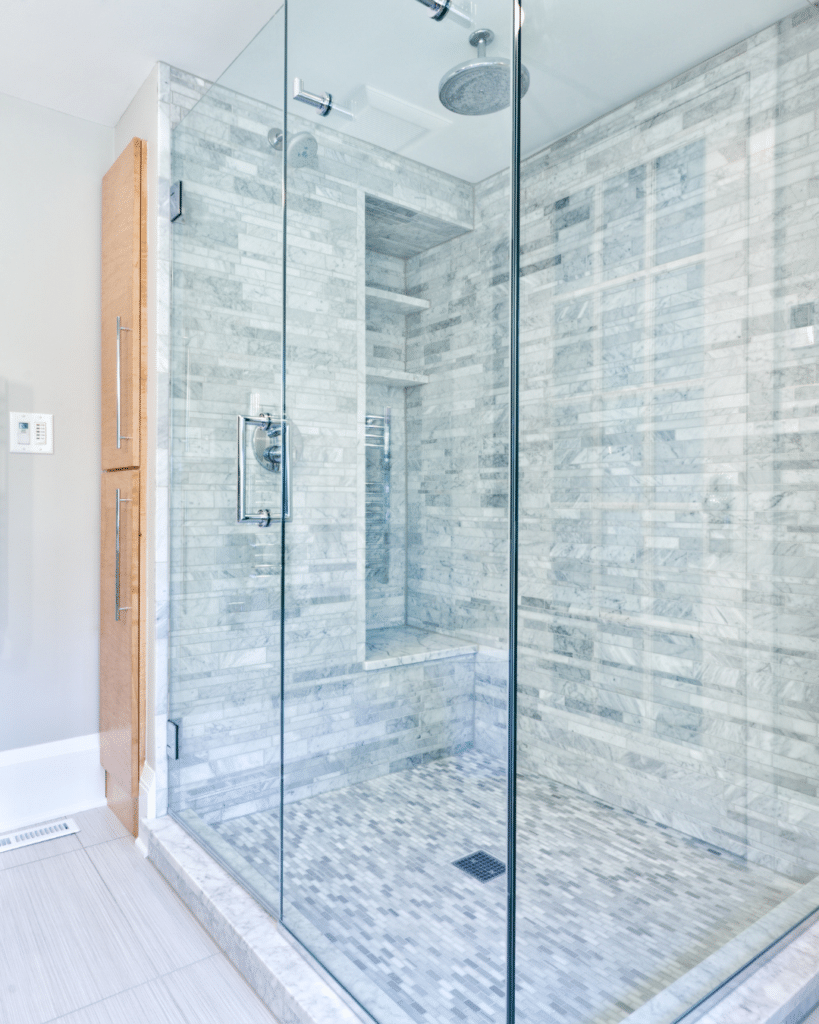
A frameless glass shower door is one of the few upgrades you notice every single day. It opens the room up, puts your tile work on display, and does away with the grimy metal track that framed doors are known for. Then a few weeks go by and the glass starts to look foggy or streaked no matter how clean the rest of the bathroom is. The usual reaction is to scrub harder, which rarely works and can make things worse. The better approach is to understand what’s building up on the glass and stop it before it sets. Do that, and you can keep the door looking close to new with about fifteen seconds of effort a day.
Why Frameless Glass Shows Every Water Spot
Two things cloud up shower glass: hard water minerals and soap scum. Every time water dries on the surface, it leaves behind traces of calcium and magnesium, the same minerals that spot up your dishes. Soap adds a thin, waxy film that those minerals grab onto. Layer after layer, you get that hazy look a regular wipe won’t budge.
Frameless doors show it more than framed ones for a simple reason. You’re looking at one large, uninterrupted panel of clear glass with nothing to hide behind, and good bathroom lighting catches every spot. It’s easy to read that as a sign something went wrong, but it’s just what happens when mineral-heavy water dries on a big clear surface. The good news is that it’s very preventable.
The Fifteen-Second Habit That Prevents Most of It
If you take away one thing, make it this: keep a squeegee in the shower and run it down the glass after every use. By pulling the water off before it dries, you stop the minerals from ever settling. Most of the buildup people spend their weekends fighting never has a chance to form.
The habit only works if the squeegee is easy to reach, so give it a home right inside the shower on a stick-on hook. A few passes from top to bottom takes about fifteen seconds. If you want to go further, wipe the hinges and hardware with a towel too, since standing water sits there just as easily and can lead to spotting or corrosion over time.
Your Once-a-Week Wipe-Down
Even with a daily squeegee, the glass does better with a light cleaning about once a week. Use a cleaner made for glass and a soft microfiber cloth. Spray it on, wipe it down, then dry the surface so you don’t trade water spots for streaks. Done regularly, this takes a few minutes.
If spotting has already set in, reach for a cleaner made for hard water or soap scum and let it sit for a minute before wiping, so the product breaks down the deposits instead of you muscling them off. One small change helps more than people expect: if you use bar soap, consider switching to a liquid body wash. Bar soap leaves more of that waxy film behind, and less film means less for minerals to cling to.
The Cleaners and Tools That Quietly Ruin Glass
The wrong tools cause damage you can’t undo. Skip abrasive scrubbers, steel wool, gritty scouring powders, and melamine “eraser” style pads. They leave fine scratches in the glass, and those scratches are permanent. They also trap grime and catch the light, so the door ends up looking cloudier than before you started.
Be careful with acidic cleaners too. Diluted vinegar is a common remedy for mineral spots on plain glass, but it’s a problem if your door has a protective coating or if it runs down onto natural stone or certain metal finishes, since the acid can wear down coatings and etch stone. If your glass is coated, follow the manufacturer’s guidance and avoid anything acidic unless they say it’s safe. When in doubt, stick with a product made for shower glass.
Hard Water Is the Real Culprit in Northern Colorado
If your glass spots up faster than it should, you’re not imagining it. Water throughout much of Northern Colorado runs on the harder side, so homes in Loveland, Berthoud, and Johnstown see mineral buildup quicker than homes in soft water areas. That’s why the daily squeegee matters even more here.
Two things can take some of the work off your plate. A whole-home water softener cuts the mineral content before the water reaches your shower, which slows spotting noticeably and helps your dishes and fixtures too. And many frameless doors and shower enclosures can be treated with a clear protective coating, either at installation or later, that makes water bead up and roll off so spots wipe away with far less effort. A coating isn’t permanent and doesn’t replace regular cleaning, but for a lot of homeowners dealing with hard water, it’s well worth it. Running the exhaust fan during and after your shower helps as well, since clearing the moisture means fewer deposits and less chance of mildew on the seals and hardware.
Frequently Asked Questions
How often should I clean a frameless glass shower door?
A quick squeegee after each shower plus one light wipe-down a week is enough for most homes. That routine keeps buildup from getting a foothold, which is what lets you skip the heavy scrubbing sessions entirely.
Can I use vinegar on my shower glass?
Diluted vinegar can help with mineral spots on plain, uncoated glass, but avoid it if your door has a protective coating or if it will run onto natural stone or certain metal finishes, since the acid can damage them. Check with your installer or the coating manufacturer first.
What causes the cloudy film that won’t wipe off?
It’s almost always hard water minerals and soap scum that have built up and bonded to the glass. A cleaner made for hard water or soap scum will lift most of it if you let it sit before wiping. If the glass stays hazy after a real cleaning, the surface may be etched, which is a separate problem.
Can etched or permanently cloudy glass be restored, or does it need replacing?
Light etching can sometimes be polished out by a professional, but heavier etching usually means the panel should be replaced. It depends on how deep the damage goes, which is why it’s worth having it looked at rather than guessing or scrubbing harder.
Is a protective coating worth it?
For a lot of homeowners in hard water areas, yes. It makes the glass shed water more easily, so cleaning takes less time and happens less often. Just remember it wears down over time and needs reapplying, and it works alongside regular cleaning rather than replacing it.
When Your Glass Needs More Than a Wipe-Down, Call Handy Glass Inc.
Good habits will keep a frameless door looking sharp for a long time, but they can’t undo etching or bring back glass that’s past saving. If your shower glass is cloudy beyond cleaning, scratched, or you’re thinking about a new frameless door, a shower enclosure, or a protective coating for the one you have, Handy Glass Inc. can help. We’ll tell you honestly whether your glass can be restored or is better off replaced, and walk you through the options that make sense for your bathroom and your budget.