

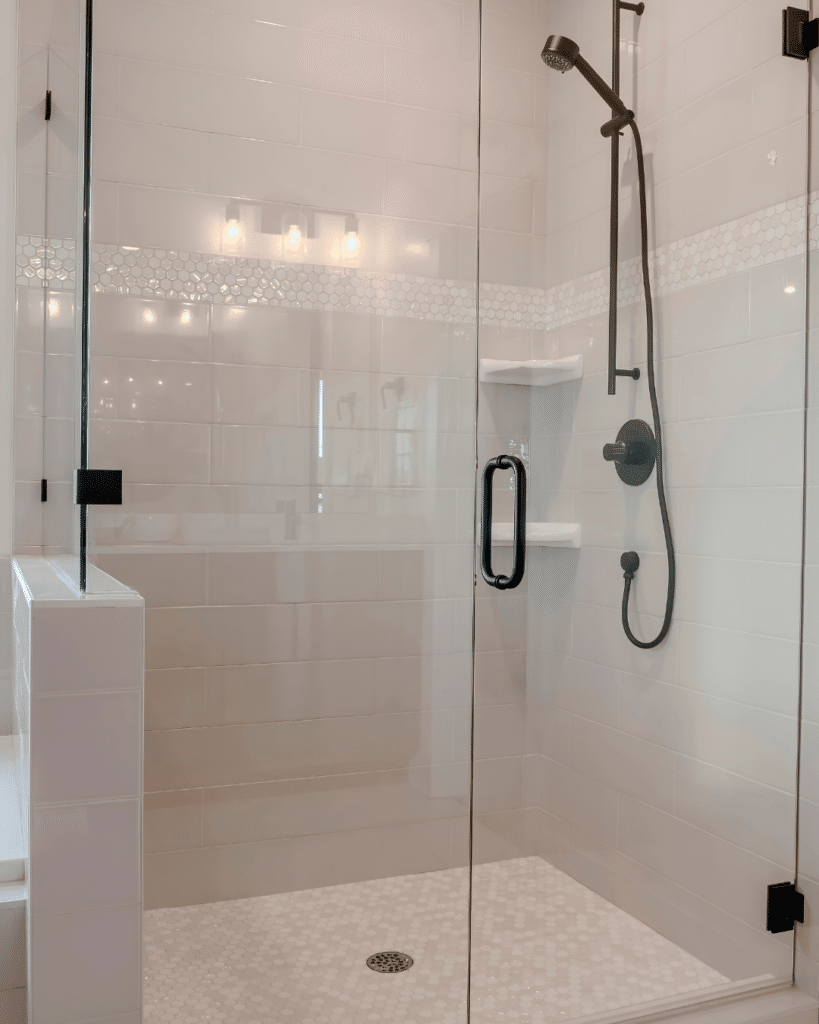
After a couple decades of measuring shower openings across Northern Colorado, I can tell you the frameless-versus-framed conversation happens on almost every job. It’s usually the first real decision homeowners face once they’ve committed to redoing a shower, and there’s no universally right answer. The right door depends on your bathroom, your budget, and (honestly) how much cleaning you’re willing to do on a Saturday morning.
Here’s the breakdown I give people when they call.
The Three Options, Without the Sales Pitch
Framed doors have aluminum framing running the whole perimeter of the glass. The glass itself is thinner, usually around three-sixteenths of an inch, because the frame does the structural work. Least expensive of the three. Has been the industry standard for decades.
Semi-frameless doors keep some framing, typically along the top and maybe one side, but leave the rest of the panel exposed. Glass is a bit thicker. Sits comfortably in the middle of the price.
Frameless doors have no perimeter framing at all. Heavy tempered glass, usually three-eighths or half an inch thick, held in place by hinges, clips, and hardware. Most expensive. Cleanest look you can get.
Framed Doors: The Underrated Option
Nobody’s Pinterest board is full of framed shower doors, but here’s the thing. They work. If you’ve got a rental property, a guest bathroom that barely gets used, or a budget that needs to stretch across a bigger project, framed doors deliver honest value. The frame does the heavy lifting, so the glass can be lighter, and the whole assembly is more forgiving of walls that aren’t perfectly plumb. In older Loveland homes, that forgiveness matters more than people realize.
Downsides. The frame collects gunk. Water gets into the bottom track, sits there, and eventually you’re scrubbing mildew out of aluminum channels with an old toothbrush. The look is also dated in most modern bathrooms, so if you’re renovating with an eye on resale, a framed door can undercut the perceived value of everything else you just spent money on.
Semi-Frameless: The Compromise That Actually Works
Semi-frameless doors are more than just a price split. You get most of that clean, glass-forward look people want from frameless, without the jump in cost. The remaining framing along the header or a side channel also helps contain water better than frameless in certain layouts, which matters if the shower stall is small or oddly shaped.
The cleaning tradeoff still exists. Any track is a place for water and soap scum to hang out. Just less of it than a fully framed door. In my experience, semi-frameless is the sweet spot for homeowners who love the modern aesthetic but don’t want to overspend on a secondary bathroom.
Frameless: What Almost Everyone Asks For
Most of the custom shower doors we install today are frameless, and I don’t see that trend reversing. The reason is simple. They look incredible, and in a bathroom, that matters more than it does in almost any other room. Without a frame breaking up the glass, the shower feels like an extension of the room instead of a walled-off compartment. Small bathrooms open up. Nice tile actually gets seen. Light bounces around instead of getting swallowed by dark aluminum.
Day-to-day, they’re also the easiest to keep clean. No channels, no tracks, just glass and a couple of hinges. A quick squeegee after each shower and a real cleaning once a week is enough.
The real cost of frameless isn’t only the glass. It’s what has to be true for it to work properly. Walls have to be plumb, or carefully shimmed. Mounting surfaces need to be solid enough to hold the weight of heavy hardware. Measurements have to be exact, because there’s no frame to hide errors. This is where installation quality stops being optional. A frameless door installed by someone cutting corners will leak, drift out of alignment, and drive you crazy inside of six months.
One more thing worth saying plainly. Frameless doors don’t contain water as tightly as most people expect. Small gaps at the hinges and along the floor are intentional, since the glass needs room to move slightly. If your shower head sprays directly at the door, you’ll see splashout on the bathroom floor. Layout matters more with frameless than with the other two options.
How I’d Choose If It Were My Bathroom
I usually ask a few questions before I point anyone toward a specific option.
How hard is your water? Loveland runs on the moderate side. Anywhere hard water is a factor, glass panels will show spots faster, and frameless doors (which are all glass, all visible) need more upkeep than framed doors where a frame quietly hides some of the mineral haze.
What’s the shower layout? A corner shower with the head aimed away from the door is a strong candidate for frameless. A tight rectangular alcove with the head aimed straight at the door usually does better with semi-frameless, because the panel can be sealed more thoroughly.
How long are you staying? For a long-term primary bathroom, frameless earns its price tag over the years. For a short hold on the property or a secondary bath, semi-frameless gets you most of the visual payoff for less.
And be honest about your cleaning habits. Frameless rewards a quick daily squeegee. If you know that’s not happening, framed or semi-frameless doors hide neglect a lot better.
Frequently Asked Questions
Which shower door type is easiest to clean?
Frameless, without much debate. No tracks, no channels, so you can wipe the enclosure down in about a minute. Framed doors take the longest because water pools in the bottom rail and grows mildew if you don’t stay after it. Semi-frameless lands in the middle.
How thick is the glass in a frameless shower door?
Three-eighths of an inch or half an inch tempered safety glass, almost always. That thickness is structural. The glass carries the load without a frame, so anything thinner isn’t safe. A reputable installer will not use undersized glass on a frameless job.
Do frameless shower doors leak more than framed ones?
They can, but only in the wrong layout or with a poor installation. Frameless doors have small intentional gaps at hinges and along the base for glass movement. If the shower head is pointed directly at the door, water finds those gaps. In a well-designed bathroom, leaks are rarely an issue.
Can I switch from a framed to a frameless door without redoing the tile?
Sometimes. It depends on whether the existing walls are plumb, the tile is sound, and the curb slopes correctly. During an on-site measurement, we can usually tell within a few minutes whether the space will support a frameless door as it is, or whether some prep work needs to happen first.
How long should a shower door last?
A well-installed framed or semi-frameless door usually goes 10 to 15 years before the hardware or seals need attention. Frameless doors, thanks to thicker glass and heavier hardware, often last 20 years or more. Rollers, seals, and hinges are all replaceable regardless of style, so a good door rarely needs a full replacement.
Is frameless actually worth the extra cost?
For a primary bathroom you’re going to use every day for years, most homeowners think so once they’ve lived with it. The look is dramatic, the cleaning is easier, and the door ages well. For a secondary bathroom or a shorter-term property, semi-frameless is often the smarter spend. There’s no wrong answer, only the right one for your situation.
Let’s Figure Out What Actually Fits Your Bathroom
Choosing a shower door isn’t really about picking a style from a catalog. It’s about what your bathroom can support, how you live in that space, and where your dollars do the most work. At Handy Glass Inc., we walk through all three options with you, measure the space carefully, and give you an honest read on which door will look and function best. No pressure, no upsells you don’t need.
Contact Handy Glass Inc. today to schedule a shower door consultation in Loveland, CO.